
How To Choose The Right Bathroom Mirror Size?
Selecting the right mirror can make a noticeable difference to how your bathroom looks and functions. When considering how to choose the right bathroom mirror size, think about vanity width, wall space, lighting, and the people using the bathroom. A mirror that is too small can leave the wall looking empty, while one that is too large can make the vanity appear unbalanced.
This guide covers bathroom mirror sizes, installation height, mirror shapes, LED options and practical sizing tips.
Why Choosing The Right Bathroom Mirror Size Matters
A bathroom mirror is a key feature above the vanity, so its size should work with the rest of the room. The right bathroom mirror size creates balance between the vanity and surrounding walls while improving the overall appearance.
A well-positioned mirror can also reflect natural and artificial light, making a smaller bathroom feel brighter and more spacious. Good vanity mirror placement improves everyday usability and provides enough reflection area for grooming. When considering bathroom design ideas, mirror proportions should be part of the planning process.
How Big Should A Bathroom Mirror Be?
Knowing how big should a bathroom mirror be starts with the vanity width. A simple sizing rule is to choose a mirror that is slightly narrower than the vanity. Leaving balanced space on both sides creates a cleaner appearance and prevents the mirror from overwhelming the vanity.
For example, a 900mm vanity could suit a mirror between 700mm and 850mm wide. A wider mirror can also work, but it may make the vanity look smaller or give the bathroom a full-wall mirror effect. Think about the wall layout, lighting and bathroom style before choosing.
How To Calculate The Right Bathroom Mirror Size Based On Vanity Width
Your vanity width is a useful starting point when selecting a bathroom vanity mirror size. This bathroom mirror size guide provides a simple starting point for choosing the right width.
600mm Vanity Mirror Size
A 450mm–550mm mirror generally works well with a 600mm vanity. These sizes suit:
- Small bathrooms
- Powder rooms
- Compact ensuites
750mm Vanity Mirror Size
For a 750mm vanity, consider a 600mm–700mm mirror. This works well for:
- Apartment bathrooms
- Small family bathrooms
900mm Vanity Mirror Size
A 700mm–850mm mirror is a practical choice for a 900mm vanity and suits many standard Australian bathrooms.
1200mm Vanity Mirror Size
A 1200mm vanity can fit a 900mm–1100mm mirror. Depending on the layout, you can go with one large mirror or two smaller mirrors.
1500mm+ Double Vanity Mirror Size
For larger vanities, two separate mirrors or one large wall-mounted mirror can work well. These options are a good fit for master bathrooms and larger shared spaces.
Bathroom Mirror Size Chart By Vanity Width
| Vanity Width | Recommended Mirror Width |
| 600mm | 450mm–550mm |
| 750mm | 600mm–700mm |
| 900mm | 700mm–850mm |
| 1200mm | 900mm–1100mm |
| 1500mm | 1200mm–1500mm |
These measurements are a starting point. Wall dimensions, fittings and your preferred design should also influence the final mirror size for a bathroom vanity.
How High Should A Bathroom Mirror Be Installed?
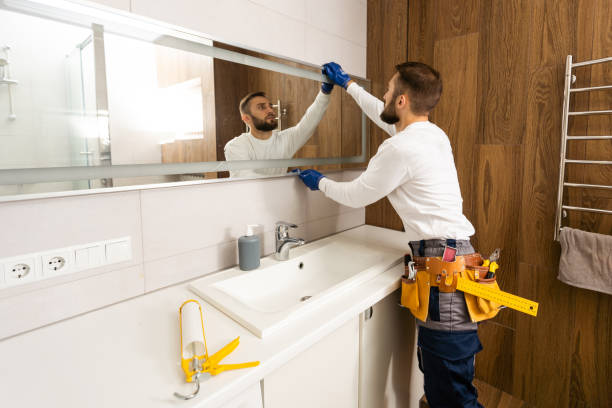
The bottom of the mirror is typically positioned 150–300mm above the vanity or countertop. The centre should generally sit around eye level, but household members’ heights should also be considered.
Allow clearance for:
- Taps and splashbacks
- Different user heights
- Vessel sinks
- LED mirror installation
Choosing The Right Bathroom Mirror Shape
Rectangular Bathroom Mirrors
Rectangular mirrors provide ample reflective area and suit most vanity styles. Their clean look works well in family bathrooms and with larger vanities.
Round Bathroom Mirrors
Round mirrors can soften straight lines and add a stylish focal point. They work well in small bathrooms and contemporary designs.
Oval Bathroom Mirrors
Oval mirrors add an elegant look and work particularly well when wall space is narrow.
Arch Bathroom Mirrors
Arch mirrors can create a premium, designer-inspired appearance while adding a sense of height to the bathroom.
What Size Mirror Should You Choose For A Small Bathroom?
Larger mirrors can help small bathrooms feel more open by reflecting more light and creating greater visual depth. Semi-frameless mirrors are useful when you want a clean appearance without a bulky border.
Other small bathroom mirror ideas include:
- Choosing a larger mirror where space allows
- Considering a semi-frameless design
- Using an LED mirror
- Avoiding oversized frames
When considering bathroom mirror ideas for small spaces, focus on reflection area, proportion and lighting.
How To Choose The Right LED Bathroom Mirror Size
When choosing an LED bathroom mirror size, start by matching the mirror width to your vanity. Then consider the lighting you need and any additional features.
Mirror Width
Choose a width that works with the vanity and available wall space.
Lighting Requirements
Consider:
- Front lighting for grooming
- Backlit LED illumination
- Adjustable colour temperature
Additional Features
An LED vanity mirror may include:
- Anti-fog technology
- Touch sensors
- Bluetooth connectivity
- Built-in clocks
Make sure these features suit your bathroom and do not interfere with other fittings.
Bathroom Mirror Size For Double Vanity
For a 1500mm or 1800mm vanity, there are two common options.
- One large mirror: Creates a seamless appearance and can make the bathroom feel more spacious.
- Two individual mirrors: Give each user personal reflection space and can allow separate lighting.
The best option depends on the vanity, wall width and preferred design.
Common Bathroom Mirror Sizing Mistakes To Avoid
Choosing A Mirror Too Small
A small mirror can look disconnected from the vanity and leave excessive empty wall space.
Selecting A Mirror Wider Than Vanity
A mirror that is much wider than the vanity can look out of balance, making the vanity seem smaller.
Ignoring Lighting Placement
Side lights and wall sconces need enough space around the mirror. Check where they will go before choosing the mirror size.
Forgetting Bathroom Users’ Heights
A mirror positioned without considering household members’ heights may be less comfortable for everyday use.
Should A Bathroom Mirror Match The Vanity Width?
A mirror can match the vanity width, especially in modern bathroom designs. However, slightly smaller mirrors are often preferred as they leave balanced space on each side. Consider the available wall space, lighting fixtures and overall layout before making your choice.
Final Thoughts: Finding The Perfect Bathroom Mirror Size
Start by measuring your vanity and the wall space around it. Then look at the mirror’s shape, height, lighting and how you will use it each day. The right-sized mirror should suit the room, make it feel brighter, and enhance the overall look of your bathroom.
Need help selecting the perfect bathroom mirror or upgrading your bathroom design? Contact Budget Shower Screens Brisbane today on 1300 727 791 for expert advice. We measure, supply and install bathroom mirrors and custom shower screens across Brisbane’s northern suburbs, so your mirror and shower glass can be planned together.
Bathroom Mirror Size FAQs
What is the standard size of a bathroom mirror?
Common standard bathroom mirror sizes include 600mm, 750mm, 900mm and 1200mm. Custom sizes can also be selected to suit different vanities and spaces.
Should my bathroom mirror be bigger than my vanity?
It can be, but a mirror wider than the vanity needs some planning. In most bathrooms, a slightly narrower mirror gives a more balanced look.
What size mirror is best for a 900mm vanity?
A mirror around 700mm–850mm wide is usually a good fit, depending on the design and surrounding fittings.
How far above a vanity should a mirror be?
The mirror is usually positioned around 150mm–300mm above the countertop, while allowing clearance for taps, splashbacks and bathroom users.
Are round mirrors good for small bathrooms?
Yes. Round mirrors can work particularly well with compact vanities because their curved shape softens the room and creates an attractive focal point.