What Size Shower Screen Do I Need?
Choosing the right shower screen is not only about picking a size from a catalogue. The shower recess, bathroom layout, screen style, door opening and nearby fixtures all affect the final measurement. So, what size shower screen do I need depends on the space available and how the screen will be installed.
Common Australian shower areas include 900 × 900mm, 1000 × 1000mm and 1200 × 900mm. These are common shower layouts, not guaranteed glass dimensions. The finished opening should always be measured before ordering.
This guide covers common sizes, screen heights, measuring tips and when a custom shower screen may be the better option.
What Are Common Shower Screen Sizes?
There is no single size that suits every bathroom. A standard shower screen size can vary by screen style and shower configuration.
| Screen type | Common width | Common height |
| Corner shower | 900–1000mm | 1900–2000mm |
| Fixed/walk-in panel | 900–1200mm+ | 2000–2100mm |
| Pivot door | 750–1000mm | 1900–2000mm |
| Sliding screen | 900–1800mm | 1900–2000mm |
| Semi-frameless | 800–1200mm | 1900–2100mm |
| Over-bath screen | 750–900mm | 1400–1500mm |
These figures are general planning ranges. Manufacturers, hardware and installation requirements can change the final dimensions.
Is 900 × 900mm a Standard Shower Size?
A 900 × 900mm shower is common in Australian bathrooms for corner installations. It provides a practical balance between shower space and overall bathroom floor area.
It is important to distinguish the shower recess from the glass enclosure. A 900 × 900mm recess does not necessarily require 900 × 900mm glass because channels, frames, hinges, and returns can affect the final measurements.
Is 1000 × 1000mm Better?
A 1000 × 1000mm shower provides more room to move and can feel more comfortable. It may suit a larger bathroom, although the extra space needs to work with the vanity, toilet and bathroom door.
What About a 1200 × 900mm Shower?
A 1200 × 900mm layout works well for rectangular showers. The extra length can create more usable shower space and may provide greater flexibility when positioning the entry, fixed panel, and showerhead.
How Tall Should a Shower Screen Be?
Many shower screens are approximately 1900–2000mm high. Some walk-in designs extend to 2100mm or higher, depending on the bathroom and screen system.
The ceiling height, showerhead position, bulkheads, and surrounding fixtures should all be considered.
Is a 2000mm Shower Screen Too High?
A 2000mm screen can suit many bathrooms, as long as the ceiling height allows enough clearance. In smaller rooms, the screen should look proportionate and work around existing fittings.
How High Should a Walk-In Screen Be?
Walk-in screens can vary in height because they use a fixed glass panel rather than a fully enclosed enclosure. The height should provide adequate splash protection while keeping access comfortable.
How Wide Should a Shower Screen Be?
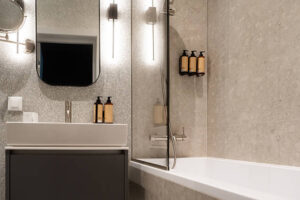
Screen width should be considered together with the shower entry. A wider panel may improve splash protection, but it can also affect access and surrounding fixtures.
Before choosing the width, check the showerhead direction, door movement, vanity, toilet, towel rails, and return panels.
How Wide Should a Walk-In Screen Be?
The appropriate measurement depends on the showerhead position, entry location and how much water needs to be contained.
A larger fixed panel may provide better splash control, but the bathroom still needs a comfortable open entry.
Shower Screen Sizes by Style
Semi-frameless screens can suit corner installations and smaller bathrooms. Depending on the configuration, widths may range from around 900mm to 1500mm or more.
Fully framed screens are commonly used with sliding or pivot doors and can work well in various bathroom layouts.
Walk-in screens use fixed glass panels and need to be planned around splash direction and entry space.
For corner configurations, common shower screen sizes include 900 × 900mm, 1000 × 1000mm, 900 × 1000mm and 1200 × 900mm.
Over-bath screens are smaller, around 750–900mm wide and 1400–1500mm high. The bath edge and showerhead position can affect the final measurement.
How Do I Measure for a Shower Screen?
Accurate measurements are essential when replacing an existing screen. It is best done by a professional.
Measure the Width
Measure wall to wall at the bottom, middle and top. Where possible, measure after tiling is complete. Recording measurements in millimetres reduces the chance of ordering the wrong size.
Measure the Height
Measure from the finished floor or shower base to the intended screen height. Check both sides because floors and ceilings may not be perfectly level.
Check the Return
For corner screens, measure the return depth as well as the main opening. This helps determine the appropriate panel configuration.
Check Walls and Door Clearance
Walls can look straight but still be slightly out of plumb. Also check whether a hinged door could hit the vanity, toilet, cabinet, towel rail or bathroom door.
Taking measurements at several points is much safer than relying on one measurement.
What Size Shower Screen Do I Need for a Small Bathroom?
Smaller bathrooms may benefit from 800 × 800mm or 900 × 900mm corner layouts, depending on the available space. Sliding doors can also help because they do not require the same door swing as a hinged screen.
A semi-frameless design can create a more open appearance, but the layout should come first. There is little benefit in choosing a particular style if it compromises access or splash protection.
What Size Shower Screen Do I Need for a Large Bathroom?
Larger bathrooms provide more options. A 1200mm-plus shower, wider fixed panel, return panel or walk-in design may work well.
Where space allows, larger shower areas can also accommodate double showers or more open-plan layouts. The screen still needs careful positioning to control water movement.
When Do I Need a Custom-Made Shower Screen?
Custom sizing can be useful when the bathroom does not match common dimensions. This may include out-of-plumb walls, uneven floors, sloping ceilings, bulkheads or unusual openings.
It can also help where nearby fixtures limit door movement or a walk-in shower needs a particular fixed-panel length. Custom does not mean better; it just allows the screen to be designed around the actual space.
What Else Should I Consider?
Before ordering, check:
- Showerhead position and direction
- Bathroom door location
- Vanity and toilet clearance
- Floor fall and drain position
- Glass thickness and panel size
- Hardware and screen style
- Privacy requirements
- Water containment
- Cleaning access
These details can make a big difference to how practical the finished screen feels.
Quick Shower Screen Size Guide
| Requirement | General Guide |
| Common shower area | 900 × 900mm |
| Larger shower area | 1000 × 1000mm |
| Rectangular shower | 1200 × 900mm |
| Common screen height | Around 1900–2000mm |
| Fixed/walk-in panel | Often 900–1200mm+ |
| Over-bath screen | Often 750–900mm wide |
| Custom screen | Useful for unusual openings |
These are general planning ranges only. An on-site measure is recommended before finalising the screen.
Final Thoughts
When considering what size shower screen do I need, start with the bathroom itself rather than a standard chart. The shower opening, entry, fixtures, and screen style all influence the final choice.
With so many shower screen sizes available, the right option is the one that fits your finished space comfortably and provides suitable access and splash control. This is important when comparing shower sizes in Australia for a repair or replacement.
Budget Shower Screens in Brisbane can help you find a practical screen solution for your bathroom layout. Whether you are replacing an existing screen or planning a new installation, accurate sizing can make the process much easier. Call us on 1300 727 791 to discuss your available space, preferred screen style, and installation requirements.
Frequently Asked Questions
What is the most common shower screen size in Australia?
900 × 900mm is a common shower layout, although 1000 × 1000mm and 1200 × 900mm options are also widely used.
What size shower screen do I need for a 900 × 900 shower?
A 900 × 900 shower does not necessarily require 900 × 900mm glass. The finished opening and screen configuration should be measured.
Is 900 × 900 a good shower size?
Yes. A 900 × 900mm layout provides practical shower space while fitting comfortably in many smaller and medium-sized bathrooms.
What is the standard shower screen height?
Many shower screens are approximately 1900–2000mm high, but height varies by screen style, ceiling, and installation requirements.
How wide should a shower screen be?
The width depends on the shower layout, entry, showerhead position, nearby fixtures and required splash protection.
What size shower screen do I need for a small bathroom?
An 800 × 800mm or 900 × 900mm corner layout may suit smaller bathrooms, while sliding doors can save useful floor space.
What size shower screen do I need for a walk-in shower?
Walk-in screen dimensions depend on the fixed-panel length, showerhead direction, entry position and required splash protection.
Are shower screens a standard size?
No. Common dimensions are available, but screens come in different widths, heights and configurations to suit individual bathrooms.
Can shower screens be made to a custom size?
Yes. Custom screens can suit unusual openings, uneven walls, sloping ceilings, restricted door clearance and specific walk-in designs.
How do I measure a shower screen for replacement?
Measure the width at the bottom, middle and top, check both sides for height, and record the return depth and door clearance.
What size shower screen do I need for a bath?
Over-bath screens are around 750–900mm wide and 1400–1500mm high, but the bath and shower layout determine the final size.